
The Art of a Garden Under Glass
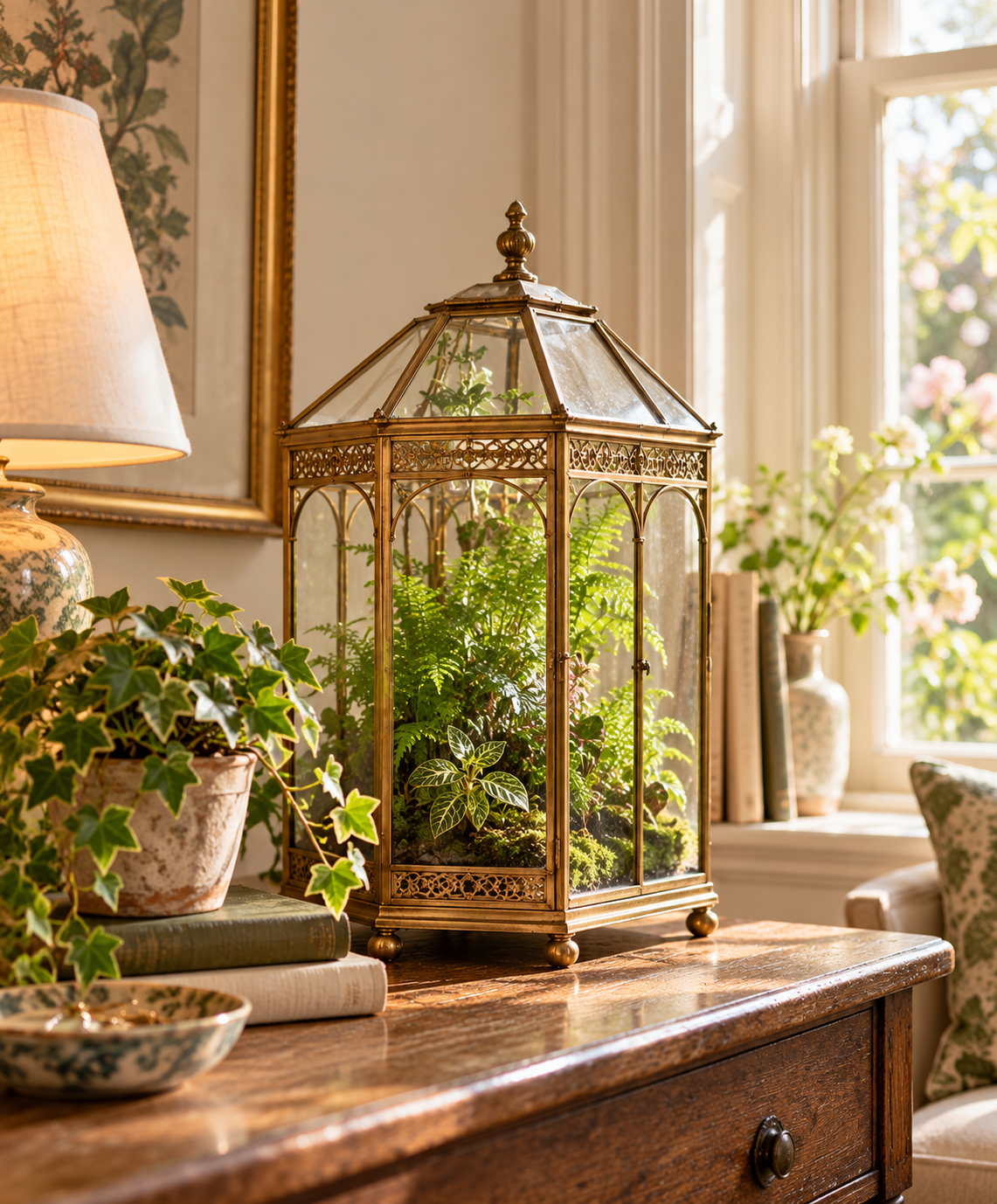
An imagined Wardian case in a contemporary interior - AI-generated image
I’ve always found so much beauty in bringing nature into my home. I love the life and atmosphere that plants add to a room, and perhaps that’s why I’ve always been drawn to conservatories. There’s something magical about the idea of being surrounded by a garden enclosed by glass. So when I first learned about the Victorian Wardian case, a beautiful marriage of greenery and architecture, it immediately captured my imagination.
The story of the Wardian case begins with Nathaniel Bagshaw Ward, a nineteenth-century London physician with a particular love of plants. Despite surrounding his home with greenery, he struggled to grow many of his beloved ferns in the city’s soot-filled air. Then in 1829, while observing a moth chrysalis inside a sealed glass bottle, he noticed something unexpected. A tiny fern and a blade of grass had begun to grow in the soil. Protected from the polluted air outside, they were thriving. The discovery inspired Ward to experiment with enclosed glass gardens, eventually leading to the cases that would bear his name. Originally practical inventions, they would go on to become some of the most imaginative and beautiful ways of bringing a garden indoors.
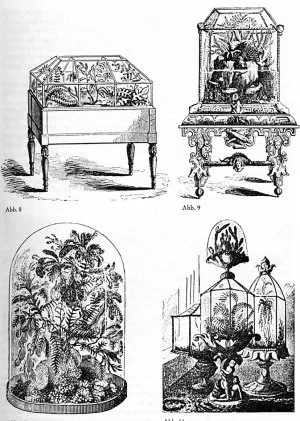
Historical Victorian Wardian case designs
Wardian cases eventually became decorative features in Victorian homes. Some were simple and practical, while others resembled elaborate miniature greenhouses, complete with delicate metalwork, glass walls, pitched roofs, arches, and ornamental details.
What fascinates me is that they’re so much more than containers for plants. They’re almost like little temples to the flowers and greenery they hold.
And they can be architectural works of art in their own right, from glass houses raised on elegant pedestals to richly gilded cases that resemble jewel boxes, displaying their plants as though they were precious treasures. Others are tall and mysterious, filled with lush greenery behind arched glass, creating the atmosphere of a tiny botanical world.
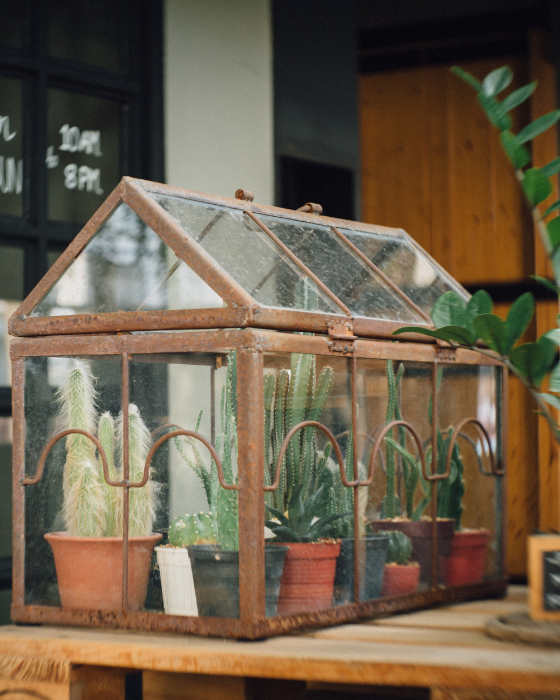
A simpler glass house with a charm all its own.
What strikes me is that the same basic idea can be romantic, whimsical, grand, or mysterious depending on the architecture of the case and how it’s incorporated into the room.
And that’s what makes them so intriguing to me. I can imagine a delicate one on a side table, a gilded miniature greenhouse on a buffet, or a particularly grand case becoming the statement piece of a room.
The more I look at them, the more I realize that the artistry isn’t only in the structure itself, or even the plants growing inside. It’s in the relationship between the two, and the atmosphere they create together.
There’s something wonderful about a little world under glass, beautiful enough to stand on its own, yet always changing as the plants inside grow.